How to recognise a crypto scam: one question, six warning signs
Last reviewed:
In short
- Ask one question of anything that promises a return: where does the money to pay me come from?
- If it comes from the next people who join, it is a scheme and it will stop paying.
- Early payments that arrive on time prove nothing. They come from later deposits.
Ask one question of anything that promises a return: where does the money to pay me come from? If it comes from the next people who join, and not from revenue outside the arrangement, it is a scheme and it will stop paying.
A scheme is not defined by dishonesty. Some organisers believe their own story. It is defined by where the money comes from, and that can be checked.
Ponzi and MLM: how the machine works
A Ponzi scheme promises a return that is high and stable, whatever markets do. The payments are real and arrive on time, but they come from the deposits of later entrants. Nothing is invested. It ends when the inflow stops growing.
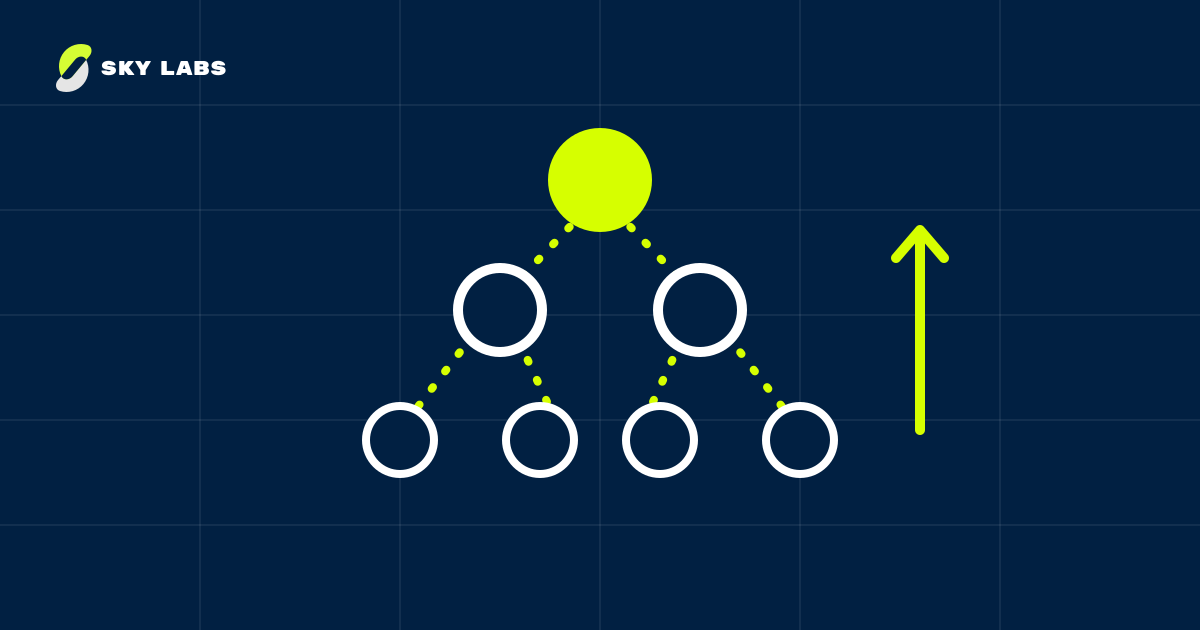
The arithmetic shows why it must end. If every participant has to recruit two more, level ten needs about a thousand people, level twenty about a million, and level thirty-three more than the population of the earth.
Multi-level marketing attaches a product to the same machine: trading signals, an education package, a mining contract. The test is whether sales to people outside the structure dominate, or recruitment fees. If recruitment dominates, it is a pyramid with a product as cover.
Two crypto versions
| Scheme | How it works |
|---|---|
| Pump and dump | Insiders buy a little-traded token cheaply. Coordinated posts and paid promotion push the price up. New buyers arrive because of the chart. The insiders sell to them, and the price falls back. |
| Rug pull: liquidity | The developers create a token and the pool where it trades, attract buyers, then withdraw the liquidity. The token can no longer be sold at any real price. |
| Rug pull: presale | Money is raised for a product that is never built. |
| Rug pull: contract | The token's code stops you selling, lets the owner create new tokens without limit, or takes most of every outgoing transfer. |
The technology invented none of these. It removed the friction: no account to open, no border, no delay and no reversal.
Six signs that should stop you
- A fixed return from a volatile activity. If the activity moves, the return moves.
- You are paid for recruiting, not for something sold to outsiders.
- An explanation you cannot follow.
- Pressure to decide now. Urgency exists to prevent checking.
- Difficulty withdrawing. Early withdrawals are usually paid. The difficulty starts later.
- Everyone involved was introduced by somebody they already knew.
What to check before you put money in
- Where does the return come from: fees and revenue from outside, or new deposits and newly created tokens?
- How many tokens exist now, how many will exist later, and when do locked tokens unlock?
- How much do the largest holders and the team control?
- Is the liquidity locked, and for how long? Can the owner create more tokens? Can you sell?
- Was the code audited? Read what was found and whether it was fixed.
- Who is the team? Are they named people with a history you can check?
- Is anybody who is not an investor paying for anything?
Questions and answers
My friend was really paid. Does that prove it is honest?
No. In a Ponzi scheme the early payments are real and on time. They come from later deposits, and they work as the scheme's advertising.
Can a scheme be legal or run by honest people?
Yes. Multi-level marketing is legal in many places, and some organisers believe their own design. What matters is where the payments come from.
How do I talk to a relative who has joined one?
Without contempt. Explain the structure: ask where the money to pay them comes from, and show the recruitment arithmetic.